He
1H1.008
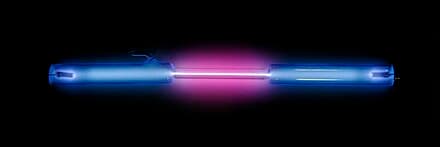
Wikimedia Commons
Picture the simplest atom possible: one proton, one electron. That's hydrogen — the lightest element in existence and the building block of the cosmos. It sounds basic, but this tiny atom makes up about 75% of all visible matter in the universe.
Stars are essentially hydrogen engines. Our Sun fuses 600 million tons of hydrogen every second, converting it into helium and releasing the energy that lights up our entire solar system. Without this process (nuclear fusion), Earth would be a frozen, lifeless rock floating in darkness.
In its pure form, hydrogen is a colorless, odorless gas. On Earth, free hydrogen is extremely rare — it's so light it escapes into space. But it's everywhere in compounds: every water molecule (H₂O) contains two hydrogen atoms. Every protein, fat, and DNA strand includes hydrogen. Without it, there would be no water and no life.
Today, hydrogen is called the fuel of the future. When it burns, it produces only water — zero carbon emissions. Japan, South Korea, and Germany already run hydrogen buses and trains. Fuel cells convert hydrogen directly into electricity without combustion.
1
Atomic Number
1.008u
Atomic Mass
1s1
e-config
2.20
Electroneg.
hydrogenwhat is hydrogenhydrogen propertieshydrogen useshydrogen elementH₂
Properties
Physical Properties
14 K
-259°C
Melting point
20 K
-253°C
Boiling point
0.00
g/cm³
Density
2.20
Pauling
Electronegativity
Atomic Structure
Group
1
Period
1
Block
S
Electron configuration
1s1
Oxidation States
-1+1
Bohr Model
K=1
Extended Properties
Structure
Crystal Structure
hexagonal (at low T)
Magnetic Ordering
diamagnetic
Physical Properties
Thermal Conductivity
0.1805W/(m·K)
Speed of Sound
1310m/s
Specific Heat
14.304J/(g·K)
Heat of Fusion
0.117kJ/mol
Heat of Vaporization
0.904kJ/mol
Electron Affinity
72.8kJ/mol
Molar Volume
11.42cm³/mol
Atomic Properties
Atomic Radius
53pm
Covalent Radius
31pm
Van der Waals Radius
120pm
First Ionization Energy
1312kJ/mol
Abundance
Earth Abundance
0.14%
Universe Abundance
75%
Ocean Abundance
10.8%
Human Body
10%
General
Atomic number1
Atomic mass1.0080u
Group1
Period1
BlockS
Standard stateGas
Physical properties
Density0.00008988g/cm³
Melting point13.99 K (-259°C)
Boiling point20.27 K (-253°C)
Speed of sound1310m/s
Molar volume11.42cm³/mol
Thermal properties
Thermal conductivity0.1805W/(m·K)
Specific heat14.304J/(g·K)
Heat of fusion0.117kJ/mol
Heat of vaporization0.904kJ/mol
Atomic properties
Electron configuration1s1
Oxidation states-1, +1
Electronegativity2.20Pauling
Atomic radius53pm
Covalent radius31pm
Van der Waals radius120pm
Electromagnetic
First ionization energy1312kJ/mol
Electron affinity72.8kJ/mol
Crystal structurehexagonal (at low T)
Magnetic orderingdiamagnetic
Abundance
Earth abundance0.14%
Universe abundance75%
Ocean abundance10.8%
Human body abundance10%
Numbers & Comparisons
×14
lighter than air
Hydrogen is the lightest substance in the universe. It's even twice as light as helium
142 MJ/kg
combustion energy
Three times more than gasoline. That's why hydrogen is the ideal rocket fuel
1,310 m/s
speed of sound
Sound travels four times faster in hydrogen than in air (343 m/s)
75%
of the universe
Three quarters of all visible matter is hydrogen. The rest is mostly helium
Applications
🌱
Fertilizers: hydrogen is used to produce ammonia — the basis of most fertilizers that feed billions of people
🛢️
Oil refining: hydrogen removes sulfur from gasoline and diesel, making fuel cleaner
🍽️
Food industry: vegetable oils are saturated with hydrogen to produce margarine and spreads
⚙️
Metallurgy: hydrogen reduces metals from ores — without it there would be no steel
📱
Electronics: ultra-pure hydrogen is needed to manufacture microchips and semiconductors
🚗
Transportation: hydrogen buses already operate in London, Tokyo, and other cities
⚡
Energy: fuel cells convert hydrogen into electricity without combustion
🚀
Space: liquid hydrogen is the primary rocket fuel for NASA, SpaceX, and Ariane
Where to find in everyday life
Drinking water
Every water molecule is two hydrogen atoms and one oxygen. Hydrogen is literally in every sip you take
Food
Proteins, fats, carbohydrates — all organic molecules contain hydrogen
Kitchen stove
Natural gas is methane (CH₄). When it burns, hydrogen in its composition combines with oxygen
Margarine and spreads
Vegetable oils are saturated with hydrogen — that's how liquid oil becomes solid margarine
Cars of the future
Toyota Mirai, Hyundai Nexo, and others already run on hydrogen. Instead of exhaust — a drop of water
Safety & Warnings
Hydrogen ignites easily and can explode. A hydrogen-air mixture (4% to 75% H₂) can detonate from the smallest spark. Hydrogen itself is not toxic, but in enclosed spaces it displaces oxygen — a person can suffocate without noticing. Another danger: hydrogen flame is transparent and nearly invisible. Working with hydrogen requires proper ventilation, leak detectors, and absolutely no open flames.
Dangerous
Fun Facts
The Sun burns 600 million tons of hydrogen every second. This energy travels 150 million kilometers to warm the Earth.
NASA rockets run on liquid hydrogen. It has the highest energy per kilogram of any fuel.
Hydrogen is 14 times lighter than air. One liter of this gas weighs just 0.09 grams — less than a feather.
Hydrogen flame is nearly invisible in daylight. A hydrogen fire can go unnoticed — making it especially dangerous.
Hydrogen is the oldest element in the universe. It appeared minutes after the Big Bang, long before any stars or planets formed.
A hydrogen car refuels in 5 minutes and drives up to 600 km. Its only 'exhaust' is pure water.
Frequently Asked Questions
Next
He
→HeEscTable