Tl
Bi
82Pb207.000
Wikimedia Commons
The Romans built aqueducts lined with lead pipes, unknowingly poisoning entire cities. They sweetened wine with lead acetate and stored food in lead-glazed pottery. Some historians believe chronic lead exposure hastened the fall of the Roman Empire. The symbol Pb comes from the Latin plumbum — the origin of the English word plumber.
Today lead remains indispensable in certain industries. It blocks radiation better than most metals. About 85% of global lead production goes into batteries. But its toxicity has forced humanity to ban lead from gasoline, paint, and drinking water pipes.
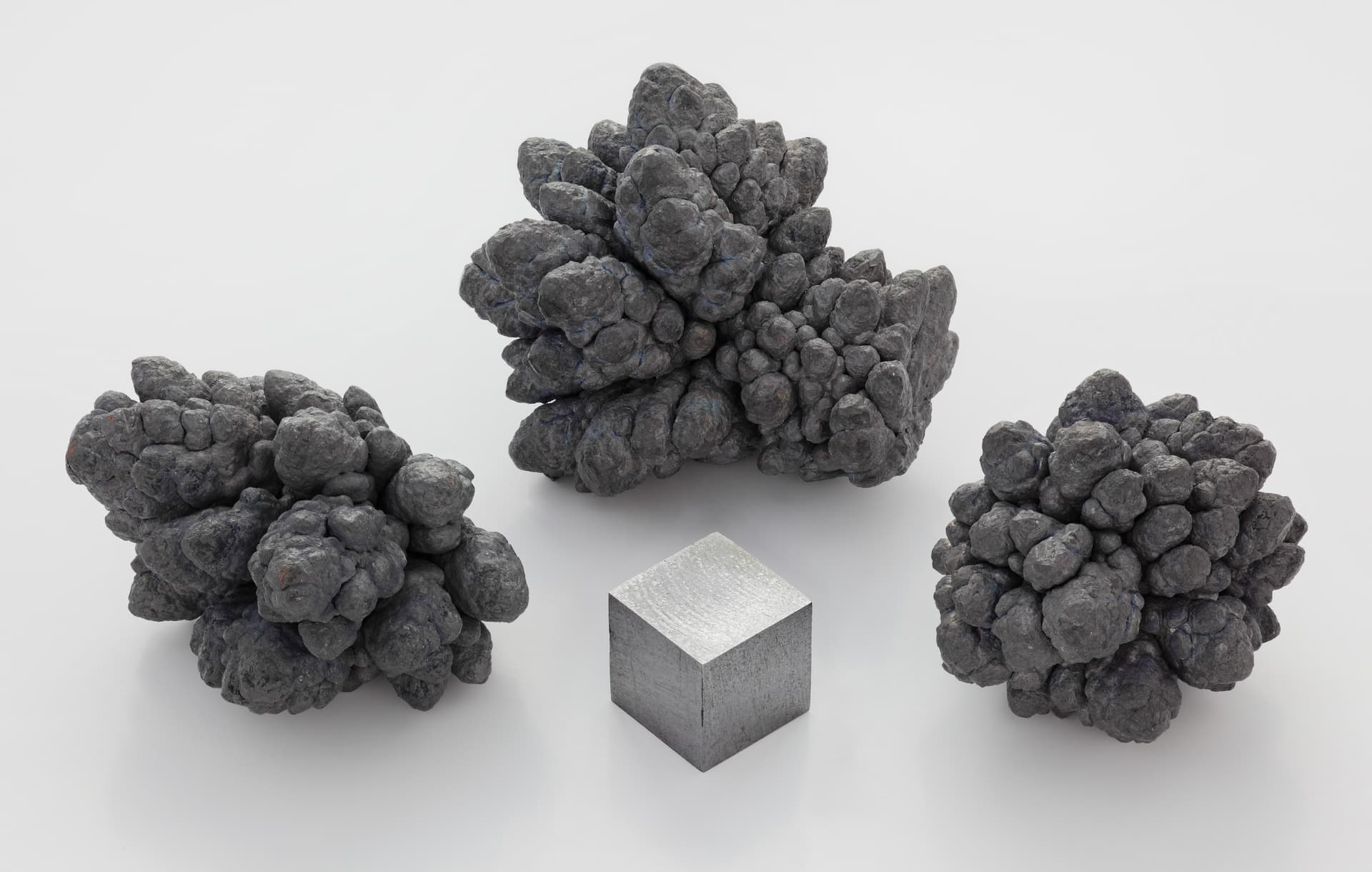
Lead is one of the oldest metals known to civilization. It is easy to smelt: the melting point is just 327 degrees Celsius. It is soft enough to scratch with a fingernail and leaves a mark on paper. With a density of 11.34 grams per cubic centimeter, lead is noticeably heavier than iron. This density, combined with its high atomic number (82), makes lead extremely effective at absorbing X-rays and gamma radiation.
Over 95% of lead-acid batteries worldwide are recycled — one of the highest recycling rates of any material on Earth.
82
Atomic Number
207.000u
Atomic Mass
[Xe] 4f14 5d10 6s2 6p2
e-config
2.33
Electroneg.
what is leadlead propertieslead useslead elementPblead poisoning
Properties
Physical Properties
601 K
327°C
Melting point
2022 K
1749°C
Boiling point
11.34
g/cm³
Density
2.33
Pauling
Electronegativity
Atomic Structure
Group
14
Period
6
Block
P
Electron configuration
[Xe] 4f14 5d10 6s2 6p2
Oxidation States
-4-2-10+1+2+3+4
Bohr Model
K=2L=8M=18N=32O=18P=4
Extended Properties
Structure
Crystal Structure
face-centered cubic
Magnetic Ordering
diamagnetic
Mohs Hardness
1.5
Bulk Modulus
46GPa
Shear Modulus
5.6GPa
Poisson Ratio
0.44
Brinell Hardness
38.3MPa
Vickers Hardness
45MPa
Physical Properties
Thermal Conductivity
35.3W/(m·K)
Electrical Resistivity
208nΩ·m
Speed of Sound
1260m/s
Young's Modulus
16GPa
Specific Heat
0.129J/(g·K)
Heat of Fusion
4.77kJ/mol
Heat of Vaporization
179.5kJ/mol
Electron Affinity
35.1kJ/mol
Molar Volume
18.26cm³/mol
Atomic Properties
Atomic Radius
175pm
Covalent Radius
146pm
Van der Waals Radius
202pm
First Ionization Energy
715.6kJ/mol
Abundance
Earth Abundance
0.00099%
Universe Abundance
0.0000001%
Ocean Abundance
0.000000003%
Human Body
0.00017%
General
Atomic number82
Atomic mass207.0000u
Group14
Period6
BlockP
Standard stateSolid
Physical properties
Density11.34g/cm³
Melting point600.61 K (327°C)
Boiling point2022.00 K (1749°C)
Speed of sound1260m/s
Young's modulus16GPa
Mohs hardness1.5
Molar volume18.26cm³/mol
Bulk modulus46GPa
Shear modulus5.6GPa
Poisson ratio0.44
Brinell hardness38.3MPa
Vickers hardness45MPa
Thermal properties
Thermal conductivity35.3W/(m·K)
Specific heat0.129J/(g·K)
Heat of fusion4.77kJ/mol
Heat of vaporization179.5kJ/mol
Atomic properties
Electron configuration[Xe] 4f14 5d10 6s2 6p2
Oxidation states-4, -2, -1, 0, +1, +2, +3, +4
Electronegativity2.33Pauling
Atomic radius175pm
Covalent radius146pm
Van der Waals radius202pm
Electromagnetic
First ionization energy715.6kJ/mol
Electron affinity35.1kJ/mol
Electrical resistivity208nΩ·m
Crystal structureface-centered cubic
Magnetic orderingdiamagnetic
Abundance
Earth abundance0.00099%
Universe abundance0.0000001%
Ocean abundance0.000000003%
Human body abundance0.00017%
Numbers & Comparisons
11.34 g/cm³
density
Lead is twice as heavy as iron and three times heavier than aluminum. You feel it the moment you pick it up
85%
goes to batteries
The vast majority of global lead is at work inside lead-acid car batteries
7,000+
years with humans
One of the first metals ever smelted — dating back to 5,000 years before the common era
95%
recycling rate
Nearly all lead from batteries is recycled — a record among industrial metals
Applications
🔋
Batteries: lead-acid batteries start the engines of 1.4 billion cars worldwide
☢️
Radiation shielding: lead screens and aprons absorb X-ray and gamma radiation in hospitals and nuclear plants
🏗️
Construction: lead sheets have protected roofs from moisture for over 2,000 years
🔬
Ammunition: lead's high density provides ballistic stability for bullets and shot
🔬
Soundproofing: lead panels dampen vibrations and noise in recording studios and server rooms
🧪
Chemical industry: lead containers resist sulfuric acid and many corrosive environments
📱
Electronics: lead solder (Sn-Pb) was the circuit-board soldering standard for decades
💧
Fishing and diving: lead sinkers and ballast weights counteract buoyancy underwater
Where to find in everyday life
Car battery
Every car has a lead-acid battery weighing 10 to 15 kilograms. Without it the engine simply will not start
X-ray apron
The lead apron at the dentist or hospital protects your organs from X-ray radiation
Fishing sinker
A small lead weight pulls the fishing line to the bottom — thanks to a density twice that of iron
Old paint
Homes built before 1978 often have lead-based paint. Dust from sanding this paint is hazardous
Crystal glassware
Real crystal contains lead oxide — it is what gives the glass its brilliance and characteristic ring
Safety & Warnings
Lead is an extremely toxic cumulative metal. It damages the brain, kidneys, nervous system, and blood formation. For children there is no safe blood lead level: even 5 micrograms per deciliter causes IQ reduction and behavioral problems. For pregnant women lead threatens fetal development defects. Poisoning occurs through inhaling dust or swallowing particles. Always work with lead using a respirator, gloves, and proper ventilation.
Dangerous
Fun Facts
85% of all lead produced goes into batteries. A single car battery contains 10 to 15 kilograms of lead, and the recycling rate hits a record-breaking 95%.
A lead apron weighing 3 to 5 kilograms completely blocks X-ray radiation. High density and atomic number 82 make lead the ideal radiation shield.
Ancient Roman water pipes were made of lead. The word plumbum gave us not only the symbol Pb but also the profession of plumber and the disease known as saturnism.
Pencils have never contained lead — they use graphite. But the name 'lead pencil' stuck because of a 16th-century mix-up when graphite was mistaken for lead ore.
Lead is used in church organ pipes. A lead-tin alloy gives the pipes a soft, deep tone that no other metal can produce.
Lead can be melted down and reused an unlimited number of times without losing quality. This makes it one of the most recyclable materials on the planet.