Ni
Zn
29Cu63.546
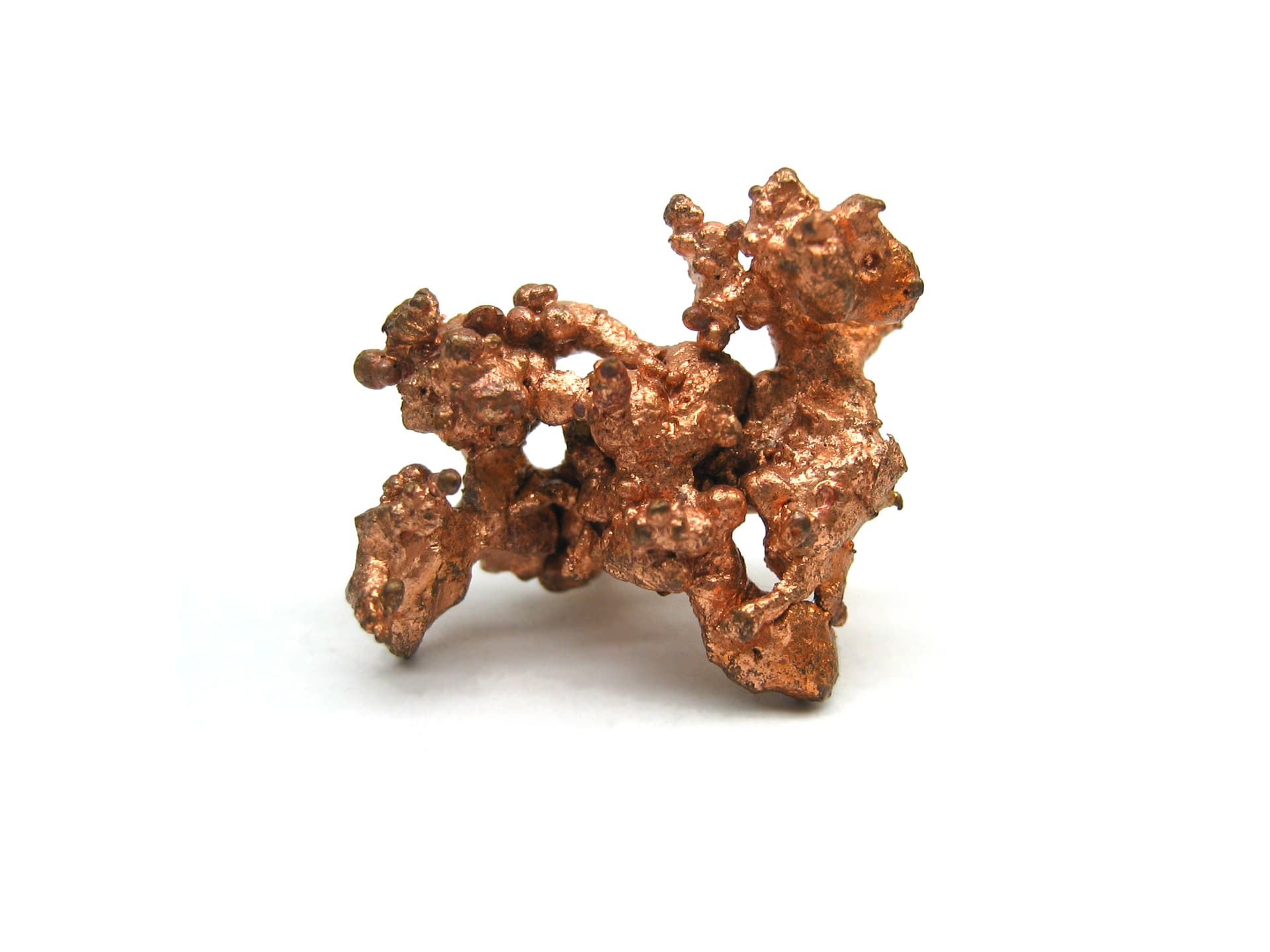
Wikimedia Commons
Around 9,000 years ago, someone picked up a reddish stone and realized it was different. It could be melted, hammered, and sharpened. That stone was copper — the first metal that changed civilization. Its warm, distinctive color is unlike any other element on the periodic table.
Copper is the second-best electrical conductor after silver. That is why 60% of all copper produced goes into wires and cables. No smartphone, computer, or power plant works without copper conductors. On top of that, copper kills bacteria — door handles made of it disinfect themselves naturally.
Ancient Egyptians purified water in copper vessels. Romans called it 'aes cyprium' — metal from Cyprus. Today copper is the backbone of electricity, electronics, and construction. The world mines over 20 million tons every year.
Electric vehicles need three times more copper than conventional cars. So demand keeps rising. Remarkably, copper can be recycled endlessly without losing quality. About 80% of all copper ever mined is still in use today.
29
Atomic Number
63.546u
Atomic Mass
[Ar] 3d10 4s1
e-config
1.90
Electroneg.
copperwhat is coppercopper propertiescopper usescopper elementCu element
Properties
Physical Properties
1358 K
1085°C
Melting point
2835 K
2562°C
Boiling point
8.96
g/cm³
Density
1.90
Pauling
Electronegativity
Atomic Structure
Group
11
Period
4
Block
D
Electron configuration
[Ar] 3d10 4s1
Bohr Model
K=2L=8M=18N=1
Extended Properties
Structure
Crystal Structure
face-centered cubic (FCC)
Magnetic Ordering
diamagnetic
Mohs Hardness
3
Bulk Modulus
140GPa
Shear Modulus
48GPa
Poisson Ratio
0.34
Brinell Hardness
874MPa
Vickers Hardness
369MPa
Physical Properties
Thermal Conductivity
401W/(m·K)
Electrical Resistivity
16.78nΩ·m
Speed of Sound
3570m/s
Young's Modulus
130GPa
Specific Heat
0.385J/(g·K)
Heat of Fusion
13.26kJ/mol
Heat of Vaporization
300.4kJ/mol
Electron Affinity
118.4kJ/mol
Molar Volume
7.11cm³/mol
Atomic Properties
Atomic Radius
128pm
Covalent Radius
132pm
Van der Waals Radius
140pm
First Ionization Energy
745.5kJ/mol
Abundance
Earth Abundance
0.0068%
Universe Abundance
0.000006%
Ocean Abundance
0.00000025%
Human Body
0.0001%
General
Atomic number29
Atomic mass63.5460u
Group11
Period4
BlockD
Standard stateSolid
Physical properties
Density8.96g/cm³
Melting point1357.77 K (1085°C)
Boiling point2835.00 K (2562°C)
Speed of sound3570m/s
Young's modulus130GPa
Mohs hardness3
Molar volume7.11cm³/mol
Bulk modulus140GPa
Shear modulus48GPa
Poisson ratio0.34
Brinell hardness874MPa
Vickers hardness369MPa
Thermal properties
Thermal conductivity401W/(m·K)
Specific heat0.385J/(g·K)
Heat of fusion13.26kJ/mol
Heat of vaporization300.4kJ/mol
Atomic properties
Electron configuration[Ar] 3d10 4s1
Electronegativity1.90Pauling
Atomic radius128pm
Covalent radius132pm
Van der Waals radius140pm
Electromagnetic
First ionization energy745.5kJ/mol
Electron affinity118.4kJ/mol
Electrical resistivity16.78nΩ·m
Crystal structureface-centered cubic (FCC)
Magnetic orderingdiamagnetic
Abundance
Earth abundance0.0068%
Universe abundance0.000006%
Ocean abundance0.00000025%
Human body abundance0.0001%
Numbers & Comparisons
#2
electrical conductor
Second only to silver, but about 100 times cheaper
9,000 BC
first used
One of humanity's oldest metals — thousands of years older than the pyramids
80 kg
in an EV
Four times more than a gasoline car. Copper is the metal of the electric future
100%
recyclable
Copper can be remelted forever without losing quality — the ultimate green metal
Applications
🏗️
Electrical power: copper wires and cables carry electricity in every building because copper conducts better than any metal except silver
🏗️
Construction: copper plumbing pipes resist corrosion and last over 50 years without replacement
📱
Electronics: printed circuit boards in smartphones, laptops, and servers are connected by copper traces
🔋
Transportation: every Tesla electric vehicle contains ~80 kg of copper in its motor, battery, and charging system
🚗
Healthcare: copper alloy surfaces on door handles and handrails in hospitals kill bacteria without chemicals
🔬
Alloys: bronze (copper + tin) for sculptures and bearings, brass (copper + zinc) for faucets and locks
🌾
Agriculture: Bordeaux mixture (a copper sulfate blend) protects vineyards from fungal diseases
🔬
Coinage: euro cents, US pennies, and many other coins worldwide contain copper or copper alloys
Where to find in everyday life
Electrical wiring
Copper wires inside your walls carry electricity to every outlet and light switch
Coins
Euro cents, US pennies, and many other coins are made from copper alloys
Kitchen faucet
Faucets and pipes are often brass — an alloy of copper and zinc that resists corrosion
Smartphone
The circuit board inside your phone is laced with copper traces connecting every microchip
Pots and pans
Copper-bottomed cookware heats quickly and evenly — that is why professional chefs prefer it
Safety & Warnings
Metallic copper is safe to touch. But soluble copper compounds are another story. Copper sulfate (CuSO₄) causes vomiting, stomach pain, and liver damage if swallowed. Copper dust irritates the eyes and lungs. There is a rare genetic condition called Wilson's disease where copper accumulates in the body. Excess copper is toxic, but a normal diet provides a safe dose — about 1–2 mg per day.
Dangerous
Fun Facts
Copper is one of humanity's oldest metals. A copper pendant from Iraq dates to 8,700 BCE — over 6,000 years older than the Egyptian pyramids.
Copper kills bacteria within hours. E. coli dies on a copper surface in just 90 minutes. That is why hospitals install copper door handles.
The Statue of Liberty is covered with 80 tons of copper sheets. Over 130 years, the copper developed a green patina — completely changing its appearance since 1886.
An electric car contains about 80 kg of copper — four times more than a gasoline car. Copper goes into the motor, battery, and all the wiring.
Octopus and squid blood is blue. Instead of iron-based hemoglobin, they use copper-based hemocyanin. Copper carries oxygen and gives their blood its blue color.
Copper can be recycled endlessly without losing quality. About 80% of all copper ever mined is still in use — in wires, pipes, and coins.