Cu
Ga
30Zn65.400
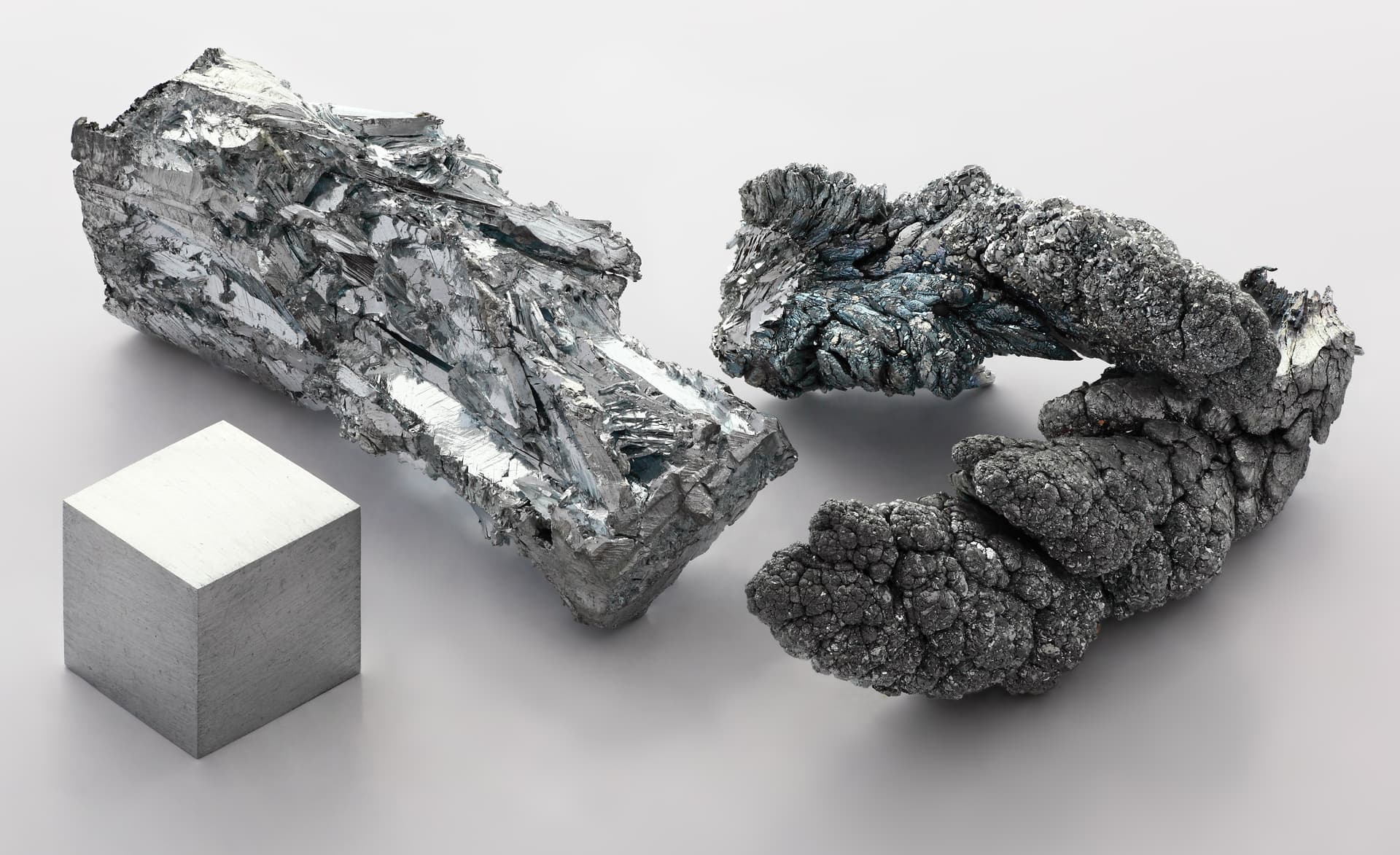
Wikimedia Commons
Every time you grab a doorknob, lean on a railing, or walk past a streetlight, you're probably touching zinc. This quiet, silvery metal coats millions of tons of steel worldwide, stopping rust in its tracks. Without zinc, our bridges, cars, and rooftops would crumble within years.
Zinc is the 30th element on the periodic table. It's fairly common in Earth's crust — about 78 grams per ton of rock. The biggest deposits are in Australia, China, and Peru. Zinc is also inside your body. You need it for immunity, wound healing, and even your sense of taste.
Today, zinc is the fourth most consumed metal in the world after iron, aluminum, and copper. Half of all zinc produced goes to galvanizing steel — coating it with a thin zinc layer to prevent corrosion. The rest goes into alloys (brass), batteries, and the chemical industry.
In medicine, zinc is becoming increasingly important. Studies show it speeds up recovery from colds and supports skin health. New zinc-air batteries could become a cheaper alternative to lithium-ion technology.
30
Atomic Number
65.400u
Atomic Mass
[Ar] 3d10 4s2
e-config
1.65
Electroneg.
what is zinczinc propertieszinc useszinc elementzinc health benefitsgalvanization
Properties
Physical Properties
693 K
420°C
Melting point
1180 K
907°C
Boiling point
7.14
g/cm³
Density
1.65
Pauling
Electronegativity
Atomic Structure
Group
12
Period
4
Block
D
Electron configuration
[Ar] 3d10 4s2
Oxidation States
-20+1+2
Bohr Model
K=2L=8M=18N=2
Extended Properties
Structure
Crystal Structure
hexagonal close-packed
Magnetic Ordering
diamagnetic
Mohs Hardness
2.5
Bulk Modulus
70GPa
Shear Modulus
43GPa
Poisson Ratio
0.25
Brinell Hardness
412MPa
Physical Properties
Thermal Conductivity
116W/(m·K)
Electrical Resistivity
59nΩ·m
Speed of Sound
3850m/s
Young's Modulus
108GPa
Specific Heat
0.388J/(g·K)
Heat of Fusion
7.32kJ/mol
Heat of Vaporization
115kJ/mol
Electron Affinity
0kJ/mol
Molar Volume
9.16cm³/mol
Atomic Properties
Atomic Radius
134pm
Covalent Radius
122pm
Van der Waals Radius
139pm
First Ionization Energy
906.4kJ/mol
Abundance
Earth Abundance
0.0078%
Universe Abundance
0.00003%
Ocean Abundance
0.0000005%
Human Body
0.003%
General
Atomic number30
Atomic mass65.4000u
Group12
Period4
BlockD
Standard stateSolid
Physical properties
Density7.14g/cm³
Melting point692.68 K (420°C)
Boiling point1180.00 K (907°C)
Speed of sound3850m/s
Young's modulus108GPa
Mohs hardness2.5
Molar volume9.16cm³/mol
Bulk modulus70GPa
Shear modulus43GPa
Poisson ratio0.25
Brinell hardness412MPa
Thermal properties
Thermal conductivity116W/(m·K)
Specific heat0.388J/(g·K)
Heat of fusion7.32kJ/mol
Heat of vaporization115kJ/mol
Atomic properties
Electron configuration[Ar] 3d10 4s2
Oxidation states-2, 0, +1, +2
Electronegativity1.65Pauling
Atomic radius134pm
Covalent radius122pm
Van der Waals radius139pm
Electromagnetic
First ionization energy906.4kJ/mol
Electron affinity0kJ/mol
Electrical resistivity59nΩ·m
Crystal structurehexagonal close-packed
Magnetic orderingdiamagnetic
Abundance
Earth abundance0.0078%
Universe abundance0.00003%
Ocean abundance0.0000005%
Human body abundance0.003%
Numbers & Comparisons
300+
enzymes
Zinc powers over 300 enzymes in your body — from digestion to immune defense
50 years
steel protection
A single zinc layer can shield steel from rust for up to 50 years without recoating
4th
most consumed
Zinc is the fourth most used metal in the world after iron, aluminum, and copper
419 °C
melting point
Zinc melts at a relatively low temperature — half that of copper (1085 °C)
Applications
🔩
Corrosion protection: galvanizing steel — over 50% of all zinc goes to coating bridges, cars, and pipes worldwide
🔬
Alloys: brass (zinc + copper) is used in musical instruments, faucets, and door locks across Europe and the US
🔋
Batteries: zinc-carbon and alkaline AA/AAA batteries by Duracell and Energizer use a zinc anode
🔬
Cosmetics: zinc oxide is the main ingredient in mineral sunscreens because it blocks ultraviolet rays
🩺
Medicine: zinc lozenges shorten cold duration, and calamine lotion treats skin irritation
🏗️
Construction: zinc rooftops in Paris, Brussels, and Berlin last over 100 years without replacement
🌱
Agriculture: zinc micronutrient fertilizers boost wheat yields by 20% in zinc-poor soils in India and Turkey
🚗
Rubber industry: zinc oxide speeds up vulcanization — without it, car tires would be too soft
Where to find in everyday life
AA and AAA batteries
Inside every alkaline battery is a zinc anode. Zinc gives up electrons and creates the electric current
Sunscreen
Zinc oxide in sunscreen reflects ultraviolet rays. Those white streaks on surfers' noses? That's zinc
Door handles and locks
Most door handles and locks are made of brass — an alloy of copper and zinc
Metal buckets and watering cans
Galvanized buckets and garden watering cans are coated with zinc, so they don't rust for years
Vitamins and supplements
Zinc tablets are sold in every pharmacy — people take them to support their immune system
Safety & Warnings
Metallic zinc has low toxicity, but inhaling zinc dust causes 'metal fume fever' — a temperature up to 39 °C (102 °F), chills, and muscle pain within 4–8 hours. Symptoms resolve within a day. Soluble zinc compounds (chloride, sulfate) irritate the stomach: the dangerous dose is over 225 mg of zinc per day. Work with zinc dust requires a respirator and proper ventilation.
Dangerous
Fun Facts
Over 6 million tons of zinc are used every year worldwide. More than half goes to galvanizing — coating steel with a thin zinc layer that fights rust for up to 50 years.
Your body contains 2–3 grams of zinc right now. It powers over 300 enzymes — from digestion to healing a paper cut on your finger.
Brass (a copper-zinc alloy) was used in Ancient Rome, but zinc wasn't isolated as a separate metal until 1746 in Germany.
Alessandro Volta's first electric battery (1800) ran on zinc and copper plates. Modern AA batteries still contain zinc.
Zinc coatings can 'heal' themselves. If you scratch a galvanized surface, the surrounding zinc sacrifices itself to protect the exposed steel.
Zinc is 100% recyclable without losing quality. About 30% of the world's zinc supply comes from recycled metal.