K
Sc
20Ca40.078
Wikimedia Commons
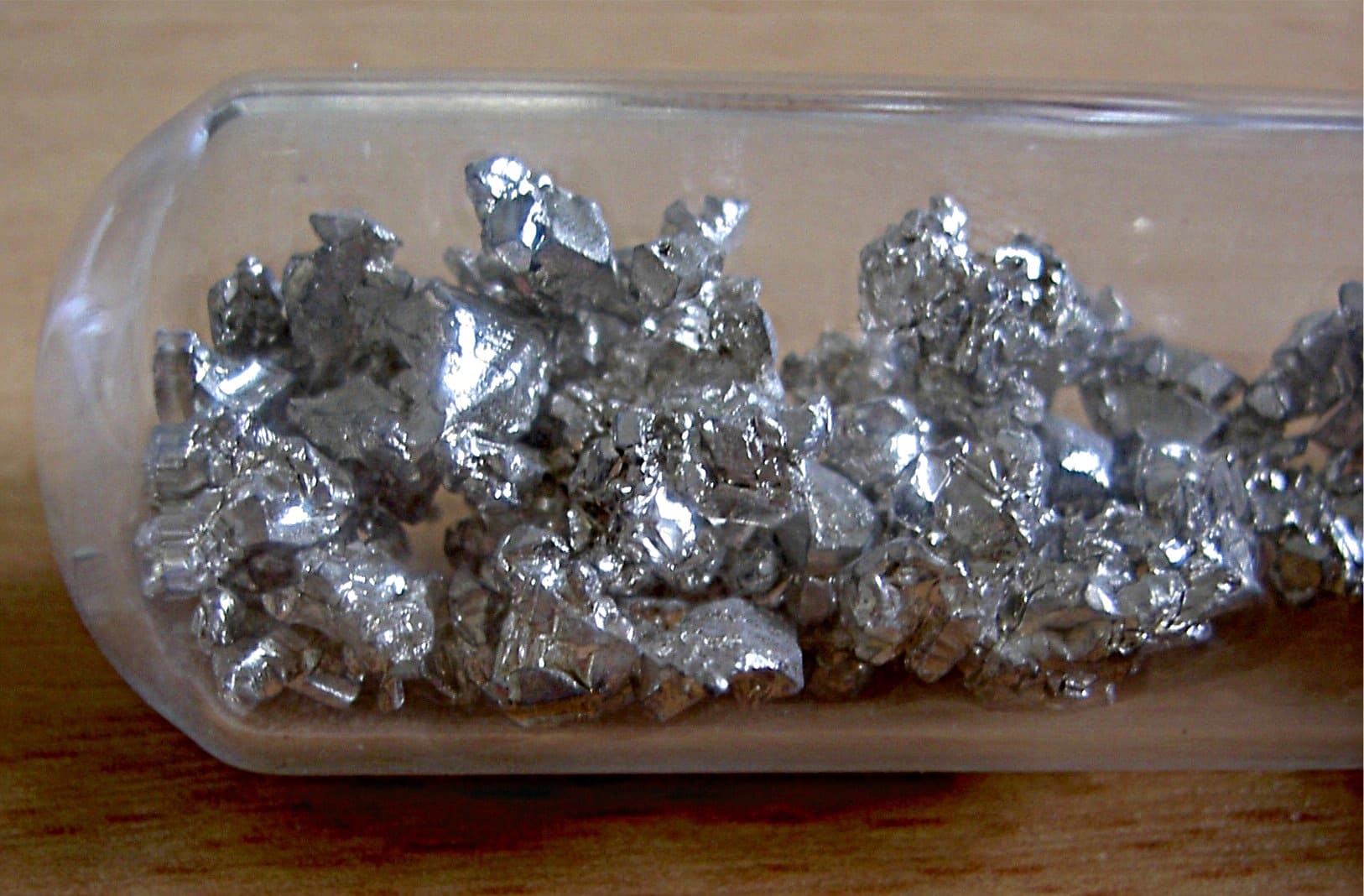
Right now, about a kilogram of this metal is holding your skeleton together. Calcium is what makes bones hard and teeth strong. Without it, your skeleton would be as flexible as cartilage. Your heart couldn't beat once. This soft, silvery metal supports both your body and entire cities.
Calcium compounds are everywhere around us. Classroom chalk, the marble of the Parthenon, the limestone of Egyptian pyramids — all of it is calcium carbonate (CaCO₃). Cement, the foundation of modern construction, also starts with calcium. The fifth most abundant element in Earth's crust shaped both natural caves and human civilization.
In pure form, calcium is a soft, silvery-white metal. You can cut it with a knife. It quickly tarnishes in air, forming an oxide layer. Free calcium doesn't exist in nature — it's too reactive. But its compounds are everywhere: in mountains, oceans, soils, and every living cell.
Today calcium is essential in construction, metallurgy, and medicine. Humanity mines billions of tons of limestone every year. Doctors prescribe calcium to strengthen bones and prevent osteoporosis. Even antacids for heartburn often contain calcium carbonate.
20
Atomic Number
40.078u
Atomic Mass
[Ar] 4s2
e-config
1.00
Electroneg.
what is calciumcalcium propertiescalcium usescalcium elementcalcium in bonesCaCO₃ limestone
Properties
Physical Properties
1115 K
842°C
Melting point
1757 K
1484°C
Boiling point
1.55
g/cm³
Density
1.00
Pauling
Electronegativity
Atomic Structure
Group
2
Period
4
Block
S
Electron configuration
[Ar] 4s2
Bohr Model
K=2L=8M=8N=2
Extended Properties
Structure
Crystal Structure
face-centered cubic (FCC)
Magnetic Ordering
diamagnetic
Mohs Hardness
1.75
Bulk Modulus
17GPa
Shear Modulus
7.4GPa
Poisson Ratio
0.31
Brinell Hardness
167MPa
Vickers Hardness
170MPa
Physical Properties
Thermal Conductivity
201W/(m·K)
Electrical Resistivity
33.6nΩ·m
Speed of Sound
3810m/s
Young's Modulus
20GPa
Specific Heat
0.647J/(g·K)
Heat of Fusion
8.54kJ/mol
Heat of Vaporization
154.7kJ/mol
Electron Affinity
2.37kJ/mol
Molar Volume
25.86cm³/mol
Atomic Properties
Atomic Radius
197pm
Covalent Radius
176pm
Van der Waals Radius
231pm
First Ionization Energy
589.8kJ/mol
Abundance
Earth Abundance
3.6%
Universe Abundance
0.007%
Ocean Abundance
0.04%
Human Body
1.4%
General
Atomic number20
Atomic mass40.0780u
Group2
Period4
BlockS
Standard stateSolid
Physical properties
Density1.55g/cm³
Melting point1115.00 K (842°C)
Boiling point1757.00 K (1484°C)
Speed of sound3810m/s
Young's modulus20GPa
Mohs hardness1.75
Molar volume25.86cm³/mol
Bulk modulus17GPa
Shear modulus7.4GPa
Poisson ratio0.31
Brinell hardness167MPa
Vickers hardness170MPa
Thermal properties
Thermal conductivity201W/(m·K)
Specific heat0.647J/(g·K)
Heat of fusion8.54kJ/mol
Heat of vaporization154.7kJ/mol
Atomic properties
Electron configuration[Ar] 4s2
Electronegativity1.00Pauling
Atomic radius197pm
Covalent radius176pm
Van der Waals radius231pm
Electromagnetic
First ionization energy589.8kJ/mol
Electron affinity2.37kJ/mol
Electrical resistivity33.6nΩ·m
Crystal structureface-centered cubic (FCC)
Magnetic orderingdiamagnetic
Abundance
Earth abundance3.6%
Universe abundance0.007%
Ocean abundance0.04%
Human body abundance1.4%
Numbers & Comparisons
~1 kg
in your body
That's how much calcium an adult carries. 99% of it is in bones and teeth
3.6%
of Earth's crust
Fifth most abundant element. Only oxygen, silicon, aluminum, and iron rank higher
4,500 yr
limestone pyramids
The Egyptian pyramids are made of calcium carbonate and still stand today
3,810 m/s
speed of sound
Sound travels 11 times faster through calcium than through air
Applications
🏗️
Construction: limestone is used to make cement — the basis of concrete. Without calcium, no skyscraper could be built
⚙️
Metallurgy: limestone is added to blast furnaces as flux. It binds impurities and helps produce clean steel
🩺
Medicine: calcium supplements strengthen bones. Plaster casts (CaSO₄) have fixed fractures for over 150 years
🌾
Agriculture: lime neutralizes acidic soils. Without liming, crop yields on acid fields drop by half
🚗
Food industry: calcium carbonate (E170) is a safe white colorant. Calcium chloride makes cheese firm and springy
💧
Water treatment: slaked lime (Ca(OH)₂) purifies water from bacteria and heavy metals. Cheaper than any filter
📄
Paper industry: chalk and CaCO₃ make paper whiter and smoother. Without them, books would look gray
🚗
Chemical industry: calcium is used to make carbide (CaC₂), which produces acetylene gas for welding when mixed with water
Where to find in everyday life
Milk and cheese
A glass of milk has 300 mg of calcium — a third of your daily need. Cheese and yogurt are even richer in calcium
Classroom chalk
School chalk is calcium carbonate (CaCO₃) or gypsum (CaSO₄). Writing on the board means writing with calcium
Eggshell
It's 95% calcium carbonate. Thin yet strong enough to support a hen — thanks to its perfect shape
Building walls
Cement, plaster, lime — all calcium compounds. Every wall around you contains calcium
Toothpaste
Contains calcium carbonate or calcium fluoride. They gently clean teeth and strengthen enamel
Safety & Warnings
Pure calcium reacts with water, releasing hydrogen gas. A hydrogen-air mixture can explode. Quicklime (CaO) heats up to 300 °C on contact with water and causes severe burns. Slaked lime (Ca(OH)₂) is a caustic alkali, dangerous for eyes and skin. The hidden danger: a lump of quicklime looks harmless, but becomes extremely hot when wet. Always wear gloves and goggles when handling lime.
Dangerous
Fun Facts
The Egyptian pyramids have stood for 4,500 years — built from limestone (CaCO₃). Calcium proved more durable than any modern concrete.
An adult body contains about 1 kg of calcium. 99% sits in bones and teeth. The remaining 1% controls your heartbeat and muscle movement.
Cave stalactites are calcium deposited drop by drop from water over thousands of years. Some grow just 1 cm per century.
Calcium burns with a bright orange-red flame. That's why its compounds are added to fireworks to produce orange colors.
The White Cliffs of Dover are millions of years of compressed seashells. They're made almost entirely of calcium carbonate.
Without calcium ions (Ca²⁺), nerves couldn't transmit signals. Every movement you make and every thought you have requires calcium.